Every hardware engineer knows the sinking feeling: a single drop of water or prolonged exposure to high humidity bypassing a faulty seal, instantly destroying a $500 custom Printed Circuit Board (PCB). When designing outdoor IoT devices, industrial control panels, or marine equipment, protecting sensitive internal components from harsh environments is the most critical factor determining product lifespan.
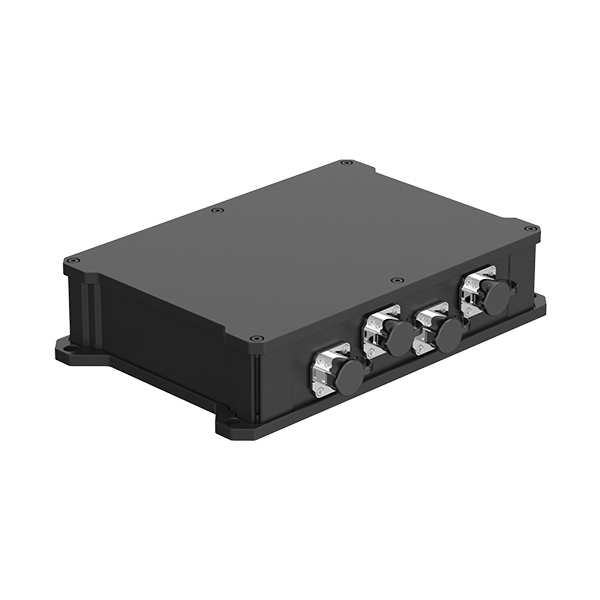
However, throwing your PCB into a generic plastic box and applying sealant isn't engineering—it's a gamble. A true waterproof enclosure for electronics requires a delicate balance of Ingress Protection (IP) ratings, material science, and thermal management. In this guide, we will break down the core engineering principles you need to know to protect your next electronic device.
Demystifying IP Ratings: What Do the Numbers Really Mean?
The International Protection (IP) rating system (IEC 60529) is the global standard for classifying the degrees of protection provided against the intrusion of solid objects and water. For a waterproof electronics enclosure, the second digit is your primary focus.
Here is a quick reference data table to help you choose the right rating based on your application scenario:
| IP Rating | Solid Protection (1st Digit) | Liquid Protection (2nd Digit) | Best Use Case for Electronics |
|---|---|---|---|
| IP65 | Total dust ingress protection | Protected against low-pressure water jets | Covered outdoor areas, factory floors with occasional washdowns. |
| IP66 | Total dust ingress protection | Protected against strong water jets | Exposed outdoor environments, heavy rain, marine decks. |
| IP67 | Total dust ingress protection | Protected against temporary immersion (up to 1m for 30 mins) | Extreme outdoor IoT nodes, underground sensors subject to flooding. |
| IP68 | Total dust ingress protection | Protected against continuous submersion (depth specified by maker) | Underwater sensors, pool lighting, deep submersible electronics. |
The Hidden Challenge: Thermal Management in a Sealed Box
Here lies the ultimate engineering paradox: If a box is completely sealed to keep water out, how does the heat get out?
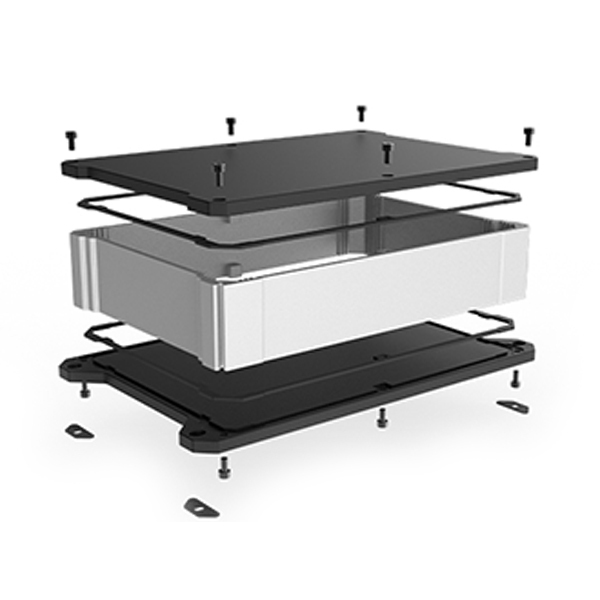
Processors, power supplies, and high-capacity batteries generate significant heat. In a standard sealed plastic enclosure, this heat is trapped, creating an oven effect that degrades battery life and causes CPUs to throttle or fail. To combat this, engineers must rely on passive thermal management. Using metal enclosures (specifically aluminum) allows the walls of the housing to act as a giant heat sink, transferring internal heat to the cooler outside air.
Scenario: Designing an Outdoor Smart City IoT Gateway
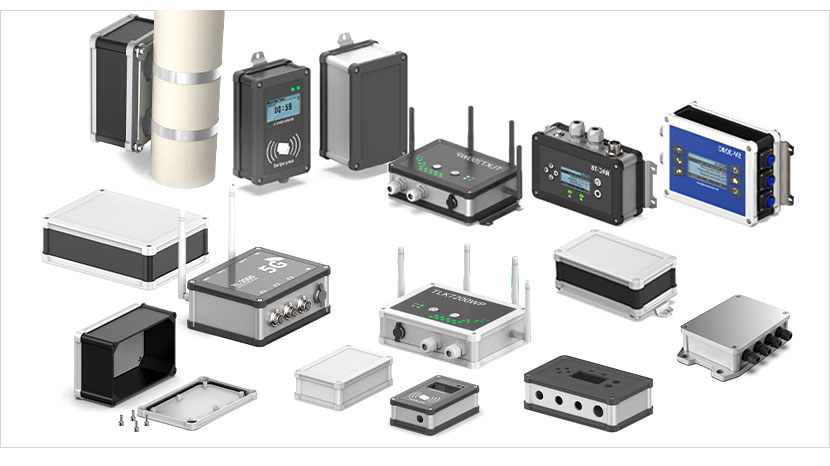
Imagine your team is deploying a network of smart environmental gateways across a coastal city. Your project faces a triple threat: torrential monsoon rains, high salt-spray corrosion, and internal heat generated by 5G transmission modules. A standard off-the-shelf plastic box will warp under the UV rays, and a poorly sealed metal box will rust or leak.
To overcome this complex bottleneck, you need a housing that acts as both an impenetrable fortress and an efficient heat sink. This is precisely where sourcing a high-performance waterproof enclosure for electronics becomes the linchpin of your project's success.
For high-stakes environments like this, the engineered aluminum solutions from YONGU provide an exceptionally logical fit. Instead of struggling to retrofit generic boxes, YONGU enclosures offer thick extruded aluminum bodies—perfect for EMI shielding and rapid heat dissipation. Combined with precision CNC-machined panels and integrated heavy-duty silicone sealing gaskets, YONGU provides an IP67/IP68 level seal without sacrificing the ability to customize antenna and I/O port cutouts. It smoothly bridges the gap between rugged environmental protection and premium aesthetic design.
Frequently Asked Questions (FAQ)
1. What material is best for a waterproof enclosure for electronics?
It depends on the environment. Polycarbonate is great for UV resistance and low-cost applications, but extruded aluminum is highly recommended for electronics that generate heat, require EMI/RFI shielding, and need superior durability against impact.
2. Does modifying an enclosure (drilling holes for cables) ruin its IP rating?
Yes, if not done correctly. Any hole drilled into a waterproof enclosure breaches its seal. To maintain the IP rating (like IP67), you must use precision CNC machining combined with proper waterproof cable glands, M-style connectors, and silicone O-rings. Partnering with a manufacturer like YONGU allows for custom factory cutouts that maintain the waterproof integrity.
3. How do I stop condensation from forming inside my waterproof enclosure?
Even if an enclosure is completely waterproof, changes in temperature can cause trapped internal humidity to condense into water droplets. To prevent this, engineers often use silica gel desiccant packs inside the box, or install a waterproof/breathable vent plug (like a PTFE membrane) that allows air and moisture vapor to escape while blocking liquid water.