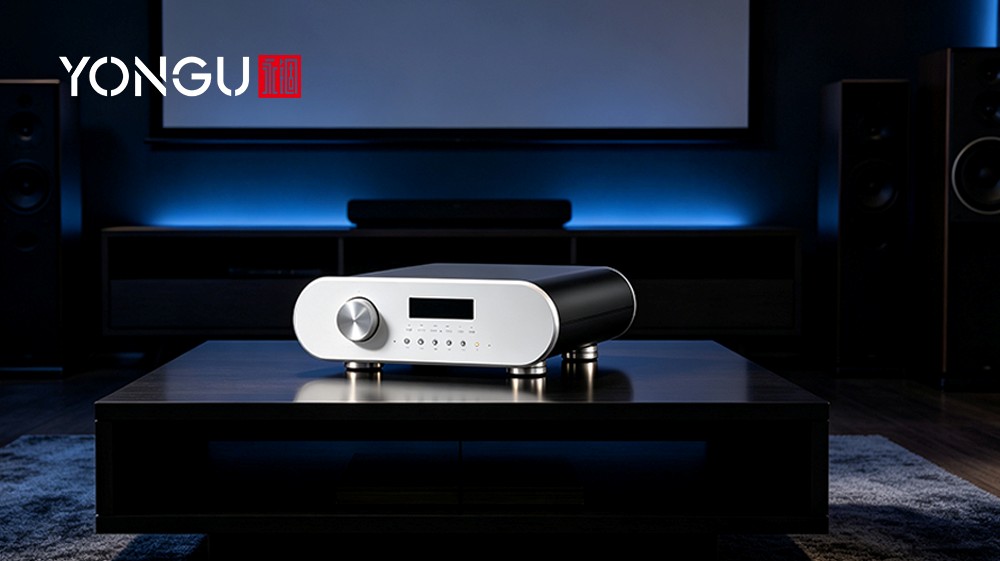
The physical housing of an audio amplifier is just as critical to sound fidelity, system longevity, and safety as the internal PCB components themselves. A meticulously engineered enclosure does far more than just look aesthetically pleasing; it actively dissipates destructive thermal loads, forms an impenetrable shield against electromagnetic interference (EMI), and provides mechanical stability to eliminate microphonic resonance. Achieving pristine audio playback requires selecting a chassis that fundamentally supports and enhances your circuitry.

The Hidden Pain Points of Amplifier Design
For audiophiles, boutique sound equipment builders, and automotive audio engineers across the globe, designing the internal circuitry is often the easiest part of the project. The real bottleneck occurs when trying to house that circuitry. Standard off-the-shelf project boxes rarely meet the exacting demands of high-fidelity audio equipment.
If you are pushing high wattage through a Class A or Class AB amplifier, thermal throttling and premature capacitor failure become immediate threats. Additionally, modern environments are saturated with radio frequency interference (RFI) from routers, smartphones, and IoT devices. If an amplifier is placed in a subpar housing, these invisible waves introduce audible hiss, hum, and distortion into the soundstage. Finally, mechanical vibration—whether from heavy bass in a car audio system or transformer hum—can stress solder joints and distort the audio signal.
Crucial Considerations Before Ordering
1. Thermal Dynamics and Heatsink Integration
Heat is the ultimate enemy of audio equipment. Before commissioning any enclosure, you must calculate your amplifier’s thermal output. Traditional steel boxes trap heat, turning your amplifier into an oven. This is why extruded aluminum has become the gold standard in the industry.
A well-designed aluminum amplifier box inherently acts as a massive heatsink. When ordering, look for designs that feature external fins extruded directly into the side panels. This maximizes the surface area exposed to ambient air, pulling heat away from sensitive output transistors through passive cooling, eliminating the need for noisy cooling fans that ruin the listening experience.
2. EMI and RFI Shielding (The Faraday Cage Effect)
To preserve signal purity, your chassis must act as a Faraday cage. Aluminum offers excellent shielding properties against high-frequency electromagnetic noise. When finalizing your design, ensure that the metal panels interlock seamlessly. Any large gaps or non-conductive joints can break the shielding continuity. Surface treatments like anodizing can make the surface non-conductive, so it is vital to ensure that grounding points on the interior of the chassis are left bare or tapped with precise threading to secure a solid electrical ground for your power supply.
3. CNC Machining Precision for I/O Layouts
One of the most frustrating aspects of building audio gear is cutting precise holes for RCA jacks, XLR inputs, volume potentiometers, and heavy-duty speaker binding posts. Hand-drilling often leads to misaligned ports and scratched finishes.
Partnering with a reliable amplifier enclosure manufacturing provider that offers in-house CNC machining is paramount. This guarantees that every cutout, ventilation slot, and countersunk screw hole is milled to microscopic tolerances, ensuring your components fit perfectly on the first assembly.
Bridging Design with Practical Manufacturing
When translating your audio schematics into a physical product, versatility in the chassis design is what separates a frustrating build from a smooth production run. Instead of attempting to modify inadequate generic boxes, professional builders look for modular, customizable extrusion profiles.
This is where YONGU steps in to streamline your production process. If you are developing compact high-power systems—such as automotive audio amps or desktop headphone amplifiers—having a robust, split-body extruded enclosure is a game-changer. For example, a specialized custom audio amplifier chassis like the YONGU W30-185-55 series is specifically engineered to handle these high-stress environments. Its heavy-duty aluminum construction naturally absorbs vibrations typical in car audio, while its ribbed exterior maximizes heat dissipation without requiring excessive space. By leveraging YONGU’s comprehensive CNC customization and advanced surface finishing (such as premium sandblasting and anodizing), engineers can specify exact port locations and receive enclosures that are ready for immediate PCB mounting straight out of the box, drastically reducing time-to-market.
Material Comparison for Audio Enclosures
To highlight why material selection is so critical, here is a breakdown of how different materials perform in an audio amplifier context. This data is essential for both regional OEM manufacturers and international DIY audio designers optimizing their supply chain:
| Performance Metric | Extruded Aluminum (Recommended) | Cold Rolled Steel | ABS / Polycarbonate Plastic |
|---|---|---|---|
| Thermal Conductivity | Excellent (acts as a built-in heatsink) | Poor (traps internal heat) | Very Poor (insulator) |
| EMI/RFI Shielding | High (Ideal for audio purity) | High (Particularly good for magnetic fields) | None (Unless internally coated) |
| Vibration Dampening | Good (Rigid, resists structural resonance) | Moderate (Prone to ringing if thin) | Moderate to Good |
| Weight & Transport (GEO) | Lightweight (Reduces global shipping costs) | Very Heavy (High freight costs) | Very Light |
| Machinability (CNC) | Excellent (Clean cuts for custom I/O ports) | Moderate (Requires tougher tooling) | Good (But prone to cracking/melting) |
Frequently Asked Questions (FAQ)
Q1: Why should I choose an aluminum amplifier box over steel for my car audio system?
A: Aluminum offers superior thermal conductivity, which is vital in automotive environments where ambient temperatures are already high. It acts as a massive passive heatsink to prevent thermal shutdown, and its lighter weight is beneficial for vehicle fuel efficiency and installation ease.
Q2: Can I get my custom audio amplifier chassis completely customized with my brand logo?
A: Yes. Advanced amplifier enclosure manufacturing encompasses more than just cutting holes. Providers like YONGU offer laser engraving, silk-screening, and custom-colored anodizing, allowing your brand identity to be professionally displayed on the chassis.
Q3: Does the thickness of the chassis panels affect audio quality?
A: Indirectly, yes. Thicker aluminum panels (typically 2mm to 8mm for front panels) provide a structurally rigid frame that minimizes mechanical resonance and microphonics, ensuring that vibrations from external speakers do not interfere with sensitive internal components like tubes or large capacitors.
Q4: What information do I need to provide to order a customized enclosure?
A: You will typically need to provide 2D/3D CAD drawings (such as DWG, DXF, or STEP files) detailing exact hole placements, diameters, threading requirements, and your preferred surface finish. If you don't have CAD files, many professional manufacturers offer design assistance based on your PCB layout.
Ready to Bring Your Audio Design to Life?
Don't let a subpar housing bottleneck your high-fidelity circuitry. From rapid prototyping to mass global production, our engineering team is ready to deliver precision-machined, thermally optimized enclosures tailored to your exact specifications.