In the rapidly evolving landscape of industrial automation, automotive electronics, and IoT, the demand for high-performance sensors is at an all-time high. However, the performance of a sensor is only as good as the protection it receives. A custom aluminum sensor housing is not just a container; it is a critical component that ensures signal integrity, thermal stability, and mechanical durability in harsh environments.
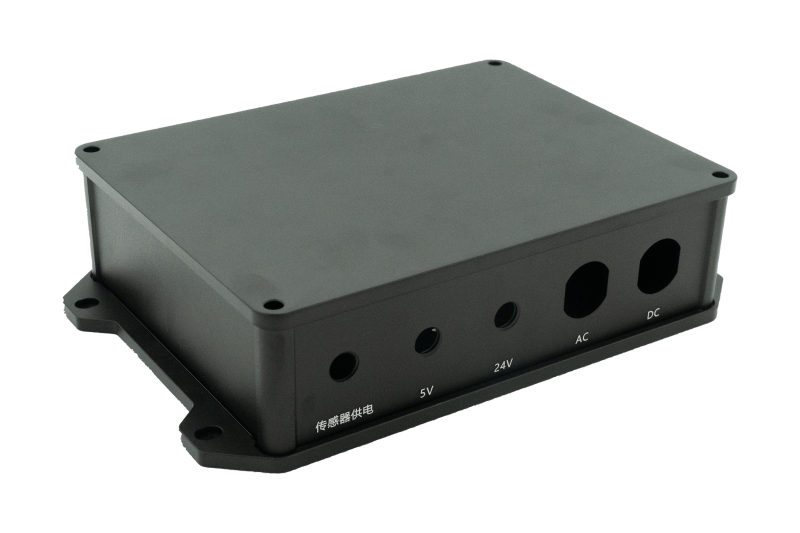
Common Challenges in Sensor Housing Selection
Engineers and procurement managers often face significant hurdles when sourcing enclosures for sensitive sensing equipment:
• Signal Interference: Plastic housings often fail to provide adequate electromagnetic interference (EMI) shielding, leading to data corruption in high-frequency environments.
• Thermal Management: Modern sensors, especially those used in LiDAR or high-speed data transmission, generate heat. Inadequate dissipation leads to "thermal drift" and reduced accuracy.
• Environmental Sealing: Sensors in outdoor or industrial settings must withstand moisture, dust, and corrosive chemicals. Finding a balance between a compact design and an IP68 rating is a recurring pain point.
• High Customization Costs: Standard off-the-shelf housings rarely fit specialized PCB layouts, yet traditional mold-based manufacturing for custom shapes is prohibitively expensive for small to medium batches.
Deep Analysis: Why Aluminum is the Material of Choice
Choosing the right alloy is the first step toward a successful design. At Yonggu Enclosure, we primarily utilize 6063-T5 aluminum profiles and 5052-H32 aluminum plates for sensor applications. Here is why:
• Thermal Conductivity: 6063-T5 aluminum offers a thermal conductivity of approximately 200 W/(m·K), which is significantly higher than stainless steel or plastic, allowing the housing itself to act as a heat sink.
• EMI/RFI Shielding: Aluminum naturally attenuates electromagnetic signals, providing a "Faraday Cage" effect that protects internal circuits from external noise.
• Precision Machining: Aluminum is highly "machinable." Utilizing advanced digital CNC equipment, we achieve a machining precision of +/- 0.01mm, ensuring that sensor apertures and connector ports align perfectly with internal electronics.
Technical Comparison: Standard vs. Custom Aluminum Housings
| Feature | Standard Off-the-Shelf Housing | Yonggu Custom Aluminum Solution |
|---|---|---|
| Fit and Form | Requires internal spacers or PCB modification. | Precision CNC milling tailored to your specific PCB. |
| Environmental Protection | Often limited to IP54 or IP65. | Supports up to IP68 with integrated foam-in-place gaskets. |
| Surface Treatment | Standard colors only. | Custom anodizing, sandblasting, or laser engraving for branding. |
| Lead Time | Immediate (if in stock). | 24-hour sampling; rapid production via JIT digital systems. |
One-Stop Solution for Custom Aluminum Sensor Housings
As a leading provider of enclosure solutions, Yonggu Enclosure addresses the gap between design and manufacturing. Our facility in the Liandong U Valley International Enterprise Port is equipped with over 160 full-digital CNC machines and automated anodizing lines, enabling a "from idea to product" workflow.
Precision Secondary Design
We provide a 30-minute secondary design service. By taking our existing catalog of aluminum profiles (A-T series) and applying custom CNC modifications, we can deliver a bespoke solution without the cost of a new extrusion mold. This is ideal for R&D phases and small-batch production.
Advanced Protection Grades
For sensors used in underwater or extreme weather conditions, our L-Series and M-Series waterproof aluminum housings offer IP68 protection. These utilize 6061 or 6063-T5 aluminum combined with precision-dispensed silicone gaskets to ensure long-term hermetic sealing.
Success Case: Vehicle-Mounted Sensor Housing
A leading scientific instrument company required a custom housing for a vehicle-mounted sensor. The requirements were strict: compact size, high impact resistance, and effective heat dissipation under a 24/7 duty cycle.
• The Solution: We utilized a 5052-H32 aluminum alloy for the panels and 6063-T5 for the body. The surface was treated with high-grade sandblasting and anodizing in "Starry Gray" to enhance heat radiation and corrosion resistance.
• The Result: Through precision CNC milling, we integrated the mounting brackets directly into the housing design, reducing the total part count and assembly time for the client. The project moved from prototype to final delivery within a 7-day window.
Frequently Asked Questions (FAQ)
1. What is the minimum order quantity (MOQ) for a custom sensor housing?
We support a "one-piece minimum order" policy. Our digital manufacturing setup allows us to handle small-scale prototyping with the same efficiency as large-scale production.
2. Can you provide custom cutouts for specialized connectors?
Yes. Our CNC processing can handle complex geometries, including threaded holes, counterbores, and specialized connector apertures (e.g., M12, USB, or RJ45) with high repeatability.
3. How do you ensure the waterproof performance?
For IP67 and IP68 ratings, we use high-precision CNC grooves and specialized "dot glue" (FIPG) sealing technology. Every waterproof unit can undergo pressure testing to verify its integrity before shipment.
Conclusion
A high-quality custom aluminum sensor housing is a strategic investment in the reliability of your product. By leveraging precision CNC machining, optimized aluminum alloys, and advanced surface treatments, Yonggu Enclosure helps you overcome technical bottlenecks in thermal management and environmental protection.
Ready to bring your sensor design to life? Contact our engineering team today for a free design consultation and experience our 24-hour rapid sampling service.