Completely preventing internal moisture damage in outdoor electronic applications requires a multi-layered engineering approach. By pairing a rigid, highly conductive metallic housing with atmospheric pressure equalization (breather vents) and strict IP67 mechanical sealing, engineers can permanently eradicate internal dew point condensation.
The "Phantom Leak": Why Perfectly Sealed Boxes Still Get Wet
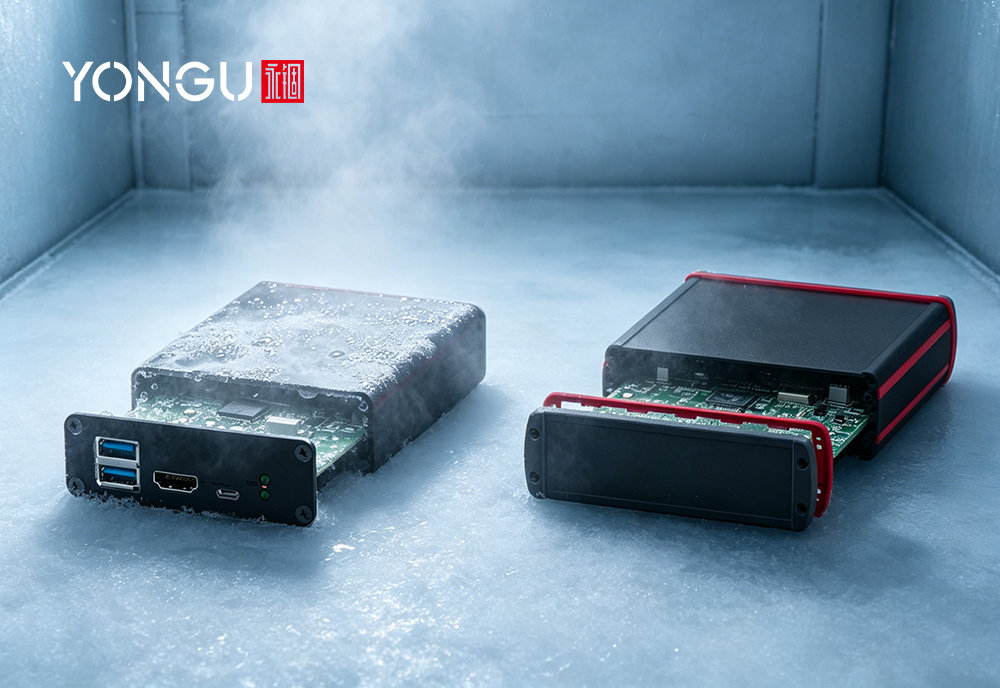
Hardware engineers often encounter a highly frustrating scenario: You deploy a premium, tightly sealed electronic control unit in an outdoor environment. A month later, the system suffers a critical short circuit. When you open the chassis, you find the internal PCB covered in water droplets—yet the exterior gaskets are completely intact, with no signs of physical rain ingress. Where did the water come from?
The culprit is not a leak; it is a law of physics known as the "dew point." Air naturally contains water vapor. When the temperature inside the enclosure drops rapidly—such as when the sun sets—the air loses its capacity to hold that moisture. The invisible vapor instantly converts into liquid condensation, forming directly on the coldest surfaces, which are often the metal walls or your sensitive microchips.
The Breathing Effect and Moisture Management
Mastering waterproof housing moisture control requires fully understanding the "breathing effect." During the day, active electronic components and solar radiation heat the internal air, causing it to expand and push outward against the seals. At night, as the environment cools, a vacuum of negative pressure is created inside the box. This vacuum actively sucks in humid ambient air through microscopic gaps in cable glands or aging rubber seals. Day after day, this cycle traps compounding levels of moisture inside the unit.
To interrupt this destructive cycle, industry professionals utilize three primary defense mechanisms: continuous active heating, passive desiccants (silica gel), and hydrophobic breather vents (ePTFE membranes that allow air to pass but block liquid water).
Condensation Prevention Strategies Comparison
| Prevention Method | Mechanism of Action | Pros | Cons |
|---|---|---|---|
| Active Anti-Condensation Heaters | Maintains internal temp above the dew point | Highly effective in freezing climates | Consumes extra power; takes up internal space |
| Desiccant Packets (Silica) | Passively absorbs ambient internal moisture | Cheap, requires no electricity | Temporary; saturates quickly and requires routine replacement |
| Hydrophobic Breather Vents | Equalizes pressure, stopping the "breathing effect" vacuum | Zero maintenance, prevents structural seal stress | Must be properly integrated into a high-quality metal enclosure |
Engineering the Foundation: Robust Housing Scenarios
Imagine you are tasked with deploying an edge-computing IoT gateway or a high-voltage solar inverter in an exposed, high-altitude mountainous region. The days are blistering hot, and the nights bring freezing temperatures. In this rigorous environment, throwing a desiccant packet into a flimsy plastic box will inevitably lead to hardware failure. Plastic acts as a thermal insulator, trapping component heat and creating massive internal temperature disparities that drastically accelerate condensation.
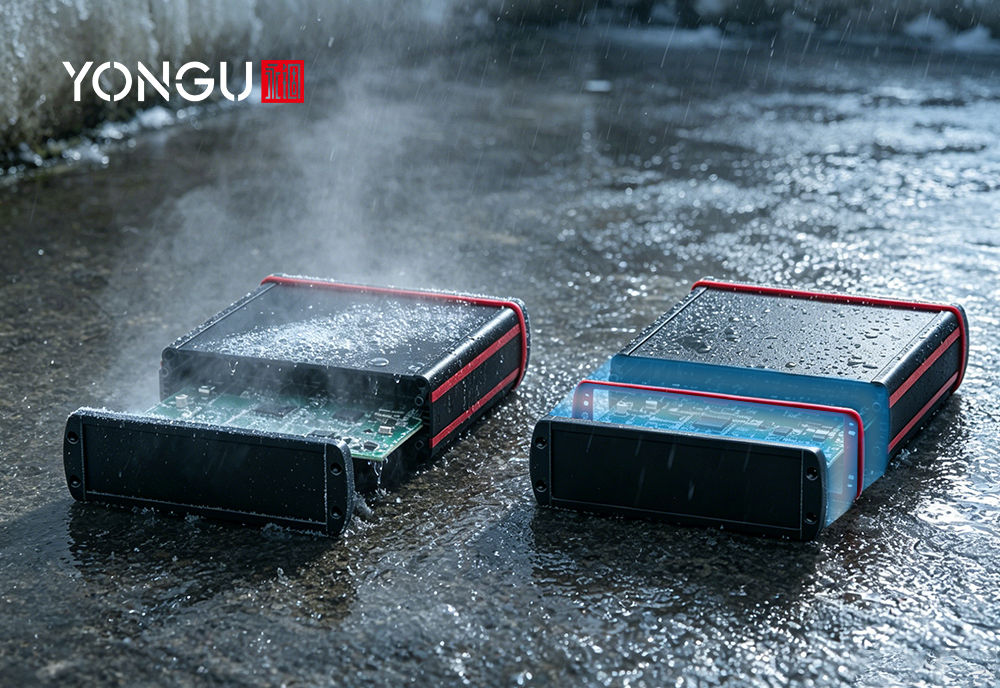
To fundamentally solve this problem, your industrial enclosure design must prioritize premium materials and uncompromising mechanical integrity. This is precisely where YONGU's IP67 Waterproof Extruded Aluminum Enclosure excels. Aluminum is a phenomenal thermal conductor. It rapidly equalizes temperatures across the entire chassis, effectively reducing the isolated "cold spots" where condensation typically forms.
Furthermore, YONGU provides heavy-duty, premium silicone dispensing seals and precision CNC-machined panels. These exact tolerances eliminate the unintentional micro-gaps that facilitate the dreaded vacuum breathing effect. By starting with YONGU’s heavy-duty aluminum foundation and simply integrating a standard pressure-compensating breather plug, you establish an invincible, bone-dry environment for your mission-critical electronics, regardless of weather extremes.
Frequently Asked Questions (FAQ)
1. Can silica gel alone completely eliminate outdoor enclosure condensation?
No. While silica gel temporarily absorbs moisture, it eventually reaches maximum saturation. To permanently stop outdoor enclosure condensation, you must combine desiccants with a pressure equalization vent and a highly rated IP67 chassis.
2. Why does aluminum prevent condensation better than plastic?
Metals like extruded aluminum have superior thermal conductivity. They help dissipate internal heat generated by electronics evenly to the outside environment, avoiding the extreme internal temperature spikes and drops that trigger the dew point phenomenon in insulating plastic boxes.
3. How does a breather vent keep water out?
Breather vents use an expanded polytetrafluoroethylene (ePTFE) membrane. The microscopic pores in this membrane are large enough to allow air molecules to pass through (equalizing pressure) but too small for liquid water droplets to penetrate, maintaining the enclosure's waterproof rating.
Safeguard Your Field Deployments Today
Never let preventable moisture build-up destroy your expensive circuitry or halt your industrial operations. Protect your investments by utilizing heavy-duty enclosures engineered to master internal thermal and atmospheric dynamics. Ready to weather-proof your hardware? Explore our complete catalogue on our official website, or Contact us today to discuss your next project with our engineering experts!