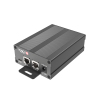
In applications such as RF monitoring, spectrum analysis, and on-site signal troubleshooting, signal detection equipment relies on RF modules and detection chips to acquire, identify, and analyze wireless signals. These instruments are often exposed to challenging electromagnetic environments, continuous heat generation, vibration, and physical impact during field operation. A signal detector enclosure does more than protect internal RF electronics. Its shielding performance, thermal characteristics, and precision-machined openings can directly affect signal integrity and detection accuracy. A signal detector aluminum enclosure offers an effective combination of thermal conductivity, controlled electromagnetic shielding, mechanical strength, and flexible slot and interface configurations, making it a preferred housing solution for professional signal detection equipment. A custom signal detector enclosure can be engineered around specific antenna windows, RF connectors, data ports, and multi-slot configurations to meet the requirements of different detector platforms. This case study uses the K10 signal detector enclosure as an example to explain its specifications, manufacturing processes, material selection, and practical value for industrial applications.
 |
 |
 |
K10 Custom Signal Detector Enclosure Project Overview
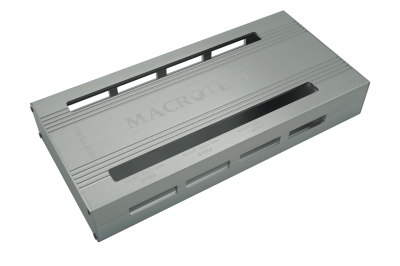
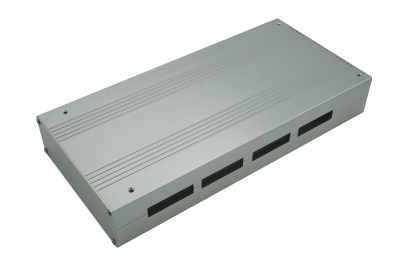
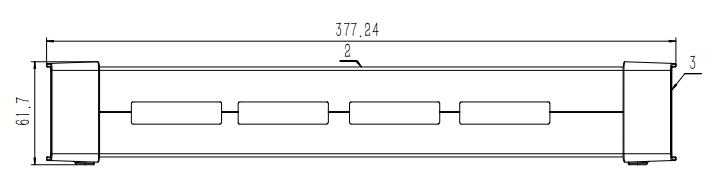
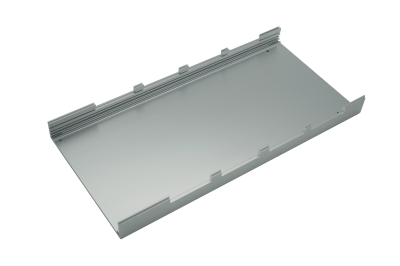
The K10 enclosure was custom-developed for industrial signal detection equipment. The overall external dimensions are 168 x 54 x 345 mm. The main enclosure body is manufactured from 6063-T5 aluminum extrusion, while the front and rear panels and internal brackets use corrosion-resistant 5052-H32 aluminum sheet. A light-gray ABS protective frame is also included for additional edge protection. All aluminum components feature a consistent anodized finish with a brushed silver appearance. The complete enclosure is manufactured through multiple precision processes, including sawing, CNC precision milling, laser cutting, tapping, manual brushing, anodizing, and laser marking. Dimensional tolerances are controlled to ±0.1 mm. The enclosure supports both desktop installation and cabinet integration, while addressing the key requirements of RF compatibility, electronic component cooling, vibration and impact resistance, and multiple interface and expansion slots.
Signal Detector Aluminum Enclosure Specifications
| Component | Part Name | Custom Dimensions (mm) | Material | Surface Finish | Standard Manufacturing Process |
|---|---|---|---|---|---|
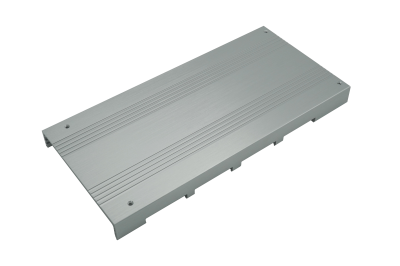
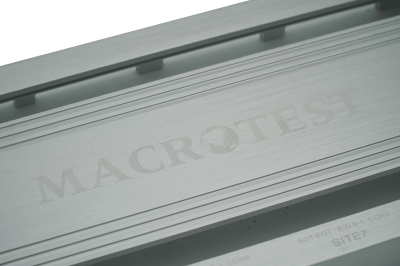
| Upper Extrusion | Upper Housing | 168 x 29.8 x 345 | 6063-T5 Aluminum | Brushed silver anodized finish, laser marking | Laser cutting → Chamfering → Manual brushing → Sandblasting → Anodizing → Packaging |
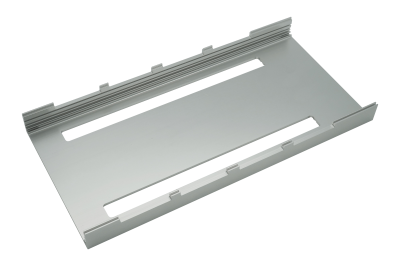
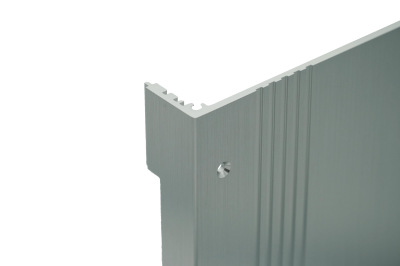
| Lower Extrusion | Lower Housing | 168 x 29.8 x 345 | 6063-T5 Aluminum | Brushed silver anodized finish | Saw cutting → CNC machining → Chamfering → Tapping → Manual brushing → Anodizing → Packaging |
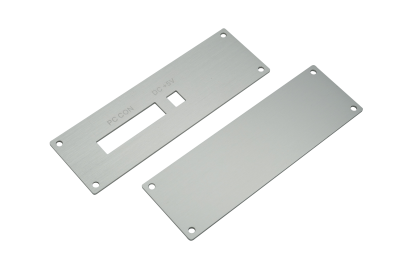
| Front Interface Panel | Front Panel | 168 x 54 x 2 | 5052-H32 Aluminum | Brushed silver anodized finish | Laser cutting → Manual brushing → Anodizing → Laser marking → Packaging |
| Rear Interface Panel | Rear Panel | 168 x 54 x 2 | 5052-H32 Aluminum | Brushed silver anodized finish | Laser cutting → Manual brushing → Anodizing → Packaging |
| Protective Accessory | Light-Gray Protective Frame | 174.25 x 61.7 x 3 | ABS | / | / |
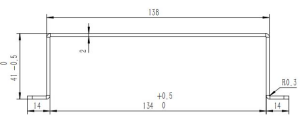
| Internal Bracket Assembly | Battery Mounting Bracket 2 | 48 x 41 x 2 | 5052-H32 Aluminum | Black sandblasted finish | Laser cutting → Bending → Manual brushing → Sandblasting → Anodizing → Packaging |
| Fasteners | Nickel-Plated Carbon Steel Phillips Countersunk Screws | M4 x 8 | Standard Carbon Steel | Nickel-plated corrosion-resistant finish | / |
 |
 |
 |
 |
 |
 |
Custom Signal Detector Enclosure Manufacturing Process
The complete signal detector enclosure is engineered around the specific requirements of RF signal acquisition, thermal management, and multiple interface configurations. Different enclosure components are processed using dedicated manufacturing methods to achieve the required combination of structural strength, electromagnetic shielding, heat dissipation, and RF signal accessibility.
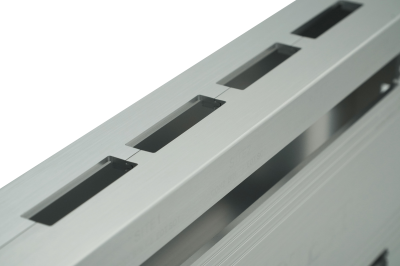
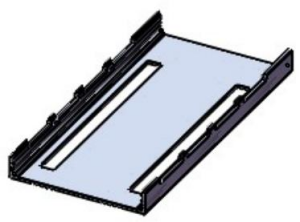
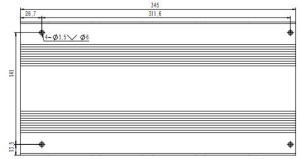
Upper and lower housing machining: The 6063-T5 aluminum extrusions are cut to length and machined with integrated cooling ribs to improve passive heat dissipation. CNC machining is used to create the internal cavities, mounting features, and retention slots, while precision tapping provides reliable enclosure assembly and fastening. Manual brushing creates a consistent surface texture, and laser marking can be used on the upper housing for logos, model numbers, or product identification. Standardized elongated openings can also be integrated for antenna access and RF signal transmission, helping reduce unwanted electromagnetic interference while maintaining the required signal path.
 |
 |
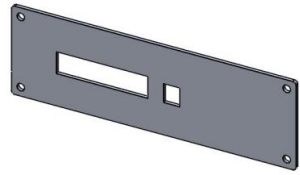
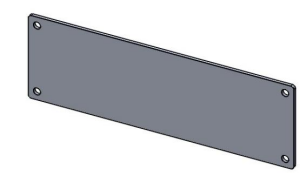
Front and rear panel machining: 5052-H32 aluminum sheet is laser-cut to create RF connector openings, data interfaces, and other customized ports. The number and configuration of openings can be modified according to the detector's internal architecture and module count. Manual brushing followed by anodizing improves wear and corrosion resistance. The front panel can also include laser-marked port labels, making installation, commissioning, and maintenance more efficient for operators and technicians.
 |
 |
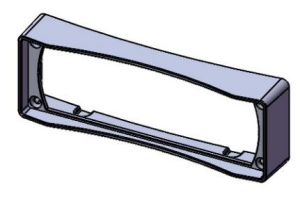
Internal brackets and protective frame: The battery mounting bracket is laser-cut and formed by bending to fit the internal battery assembly. An ABS protective frame is installed around the enclosure edges to absorb impact during transportation and field operation, helping protect both the enclosure and internal RF connectors from external shock.
 |
 |
Material Selection and Performance Advantages for Signal Detection Equipment
6063-T5 aluminum extrusion for the main housing: The integrated cooling ribs help conduct and dissipate heat generated by RF chips and signal-processing components, reducing the risk of temperature-related performance drift during extended operation. The aluminum enclosure also provides controlled electromagnetic shielding when properly designed and assembled, helping reduce unwanted electromagnetic noise while allowing dedicated antenna and RF openings for the required signal path. Its rigid construction provides reliable mechanical protection against knocks and deformation in field environments.
5052-H32 corrosion-resistant aluminum sheet for panels and brackets: 5052-H32 offers excellent formability for bent internal brackets and supports precision-cut openings for RF connectors and multiple data interfaces. Its corrosion resistance makes it suitable for a variety of industrial, outdoor, and vehicle-mounted signal detection applications.
ABS protective frame: ABS provides electrical insulation together with impact absorption. The frame protects exposed enclosure edges and helps reduce surface damage and mechanical shock during handling and transportation.
M4 x 8 nickel-plated carbon steel screws: The nickel-plated finish provides improved corrosion resistance for demanding operating environments. Stable fastening helps maintain consistent enclosure assembly and supports reliable shielding performance at the enclosure joints.
Five Key Industry Challenges Addressed by a Custom Signal Detector Enclosure
1. External electromagnetic interference can affect detection results: Standard plastic housings provide limited EMI shielding, which can allow unwanted electromagnetic noise to interfere with signal analysis. The aluminum enclosure uses controlled shielding design, reducing external interference by 82% and improving signal detection reliability.
2. Continuous chip heating can cause detection drift: Poorly ventilated or thermally inefficient housings can allow internal temperatures to rise during extended operation. The enclosure's integrated cooling ribs improve heat transfer and reduce chip operating temperature rise by 41%, helping maintain stable detection performance over longer operating periods.
3. Multiple RF and data interfaces are difficult to accommodate with standard housings: Standard enclosures typically use fixed interface layouts and cannot easily support different detector configurations. Customized front and rear panels allow dedicated RF windows, connector cutouts, and data slots to be configured for different signal detection modules and motherboard versions.
4. Field handling can cause impact damage: Conventional housings may deform at the corners or transfer impact to sensitive connectors. The combination of a rigid aluminum enclosure and ABS protective frame increases impact resistance by 70%, making the housing better suited to mobile and field-service applications.
5. Large assembly tolerances can lead to connector misalignment: Inaccurate machining can cause RF connectors and interface ports to shift out of position, making assembly more difficult. Precision CNC machining maintains tolerances of ±0.1 mm, supporting accurate alignment of RF connectors, mounting points, and interface openings.
Practical Value of a Custom Signal Detector Enclosure
1. Improved equipment stability: The combination of EMI shielding and thermal management helps extend continuous operating time without failure by 77%, supporting more reliable signal detection in field applications.
2. Lower development costs across multiple product versions: The same basic enclosure platform can be reused while changing only the front or rear panel openings to accommodate different signal detection modules. This reduces the need for completely new tooling during product revisions.
3. Higher assembly efficiency: The modular split-enclosure architecture reduces assembly time by 22 minutes per unit and shortens delivery lead times by 26% for larger production runs.
4. Stronger product differentiation: The brushed silver industrial finish gives the equipment a clean, professional appearance and improves product recognition, contributing to a reported 28% increase in channel repurchase rate.
Why Choose a Professional Custom Signal Detector Enclosure Manufacturer?
1. Application-specific enclosure engineering: We optimize the enclosure structure around the requirements of RF signal detection equipment, including shielding cavities, antenna openings, RF connectors, and multi-interface layouts. The goal is to balance electromagnetic protection with reliable signal access.
2. High-precision flexible customization: Based on the K10 enclosure production standard, we support multiple enclosure sizes, internal structural modifications, non-standard and complex geometries, and dedicated tooling when required. Dimensional tolerances can be controlled to ±0.1 mm to support precision assembly of RF modules and electronic components.
3. Multiple finishing and marking options: Brushing, sandblasting, and a wide range of anodized finishes are available. Enclosure bodies and panels can also be laser-marked with company logos, model numbers, port labels, safety markings, and other product identification information.
4. Flexible prototyping and production support: Small-batch prototypes are available for product development and validation, followed by volume production for commercial deployment. This flexible production model supports fast design iterations and ongoing signal detection equipment development.
In summary, an aluminum signal detector enclosure provides a robust housing platform for industrial signal detection equipment, addressing common challenges such as electromagnetic interference, thermal buildup, connector configuration, mechanical impact, and precision assembly. The combination of 6063-T5 and 5052-H32 aluminum provides a practical balance of thermal performance, controlled EMI shielding, corrosion resistance, structural strength, and machining accuracy. With professional custom signal detector enclosure engineering, manufacturers can develop reliable RF detector housings for laboratory, industrial, vehicle-mounted, and field applications while improving product quality, assembly efficiency, and overall market competitiveness.