The Engineering Guide to Outdoor Enclosure Protection: Why IP68 Matters
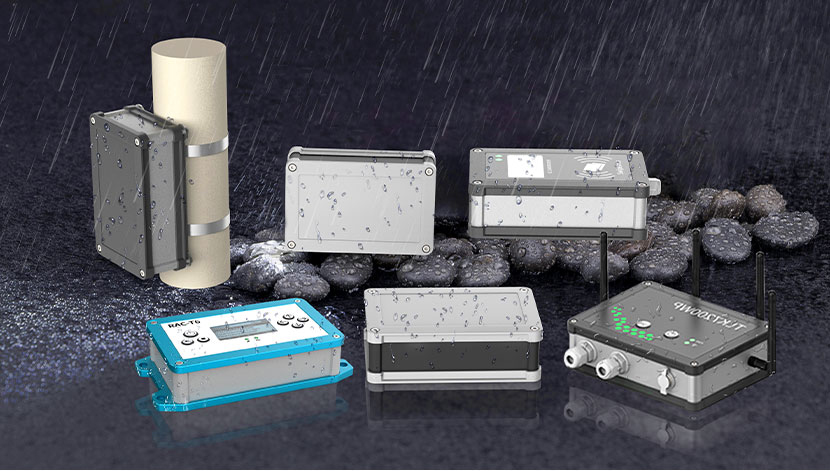
Outdoor electronic installations face some of the most unforgiving environments on the planet. From remote environmental monitoring stations and smart agriculture gateways to outdoor security systems, these devices are continuously subjected to extreme conditions. When deploying sensitive circuitry in the field, standard housings often fail to provide the long-term protection required to keep systems operational.
Protecting these systems requires a deeper understanding of environmental stressors, material limits, and mechanical sealing principles. Selecting a high-quality IP68 Waterproof Aluminum enclosure can mitigate these risks, ensuring that moisture, dust, and temperature fluctuations do not lead to premature component failure.
1. Common Outdoor Electronics Failure Modes
To design a robust outdoor system, engineers must first identify the potential hazards in the field. Environmental degradation is rarely caused by a single event; instead, it is often the result of continuous exposure to several key stressors:
- Moisture Ingress and the Siphon Effect: Rain and high humidity are obvious threats, but the mechanism of ingress is often misunderstood. During daily thermal cycles, the internal air temperature of an enclosure rises and falls. When the temperature drops rapidly—such as during a sudden rainstorm—the air inside contracts, creating a partial vacuum. This vacuum can pull external moisture through minuscule gaps in gaskets or threaded interfaces.
- Internal Condensation: Even if liquid water is successfully blocked, humid air trapped inside the enclosure can condense on cooler internal walls. This condensation leads to surface corrosion on PCBs, short circuits, and localized component failures.
- UV Degradation: Many plastics, such as standard ABS or polycarbonate, degrade when exposed to outdoor ultraviolet (UV) radiation. Over time, UV light breaks down chemical bonds, causing the plastic to become brittle, crack, and lose its impact resistance.
- Thermal Build-up: Enclosed electronics generate heat. In plastic enclosures, this heat cannot dissipate efficiently, leading to thermal runaway and shortened lifespans for capacitors, processors, and power modules.
2. Evaluating Aluminum vs. Plastic for Outdoor Housings
While plastic enclosures are lightweight and cost-effective for indoor use, aluminum alloys offer significant mechanical and thermal advantages for outdoor deployments:
Superior Heat Dissipation
Aluminum has a thermal conductivity of approximately 160–200 W/m·K, whereas plastics generally range from 0.1 to 0.5 W/m·K. An aluminum enclosure acts as a natural heatsink, transferring heat generated by internal components directly to the outside environment, lowering the overall operating temperature of the PCB.
Intrinsic Electromagnetic Shielding (EMI/RFI)
Outdoor environments are increasingly crowded with wireless signals. Aluminum provides passive electromagnetic shielding, blocking high-frequency noise and protecting sensitive signals from external interference without requiring expensive secondary coatings.
Rugged Mechanical Durability
Aluminum structures withstand physical impacts, extreme temperature variations, and high UV exposure without losing structural integrity. This ensures the mechanical protection of the internal circuitry over years of service.
3. Deciphering IP68 Protection Standards
The Ingress Protection (IP) rating system defines the sealing effectiveness of electrical enclosures against solids and liquids. For critical outdoor equipment, IP68 is widely regarded as the industry benchmark:
- First Digit (6): Complete protection against dust, sand, and particulate ingress over extended exposure periods.
- Second Digit (8): Protection against continuous immersion in water under conditions specified by the manufacturer (typically deeper than 1 meter and for prolonged durations).
To achieve a reliable IP68 rating, an enclosure relies on high-tensile silicone or EPDM gaskets compressed uniformly by precision-machined end-plates. Proper bolt torque and precise gasket channel tolerances are critical to maintaining this seal over time.
4. Aligning Enclosure Customization with Project Needs
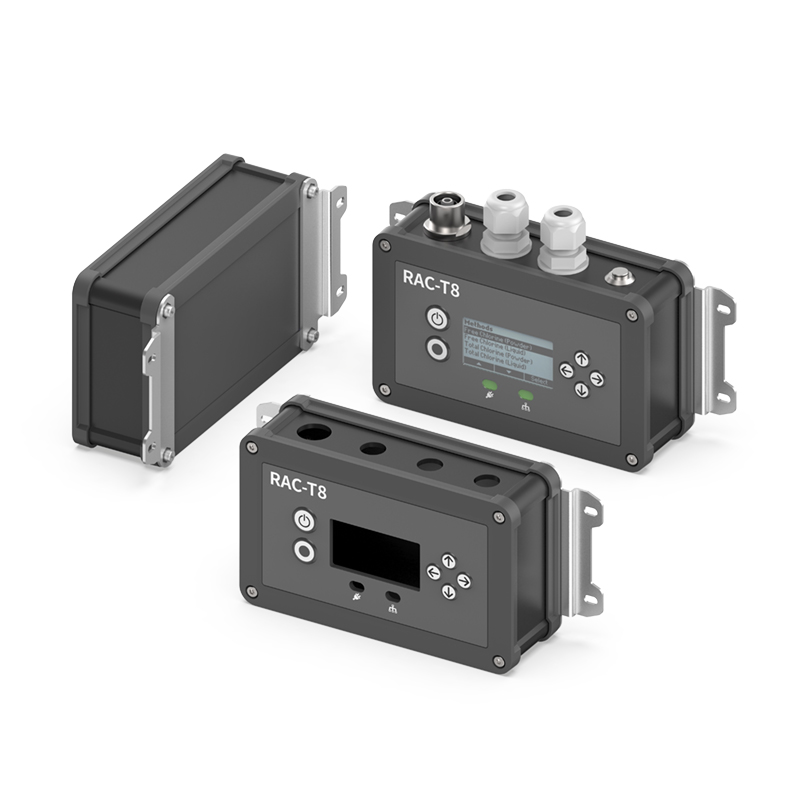
Consider a typical industrial design scenario: a team is designing a smart gateway (similar to the RAC-T8 tracking system) that requires outdoor wall-mounting, two heavy-duty cable glands, and an integrated OLED screen with local control buttons. Off-the-shelf enclosures rarely match these requirements out of the box, forcing engineering teams to source secondary machining services or compromise on water sealing.
In this technical scenario, utilizing a highly adaptable IP68 Waterproof Outdoor Aluminum Enclosure from YONGU offers a practical path forward. The YONGU L05C series features a specialized extrusion design where the length (internal height 'h') is fully customizable to match the depth of your PCB. This allows developers to optimize spatial efficiency without the capital expenditure associated with custom tooling.
YONGU provides full-service customization support, including precision CNC hole-drilling for cable glands, custom anodized finishes for corrosion resistance, and professional laser engraving for functional UI markings. These customizations are managed under a strict quality system, ensuring the IP68 rating remains intact after modification.
5. Technical Specifications: YONGU L05C Series
The table below provides detailed dimensional data for the L05C standard configurations. Length and height configurations can be adjusted to meet specific volume requirements.
| Product No. | External Dimensions (mm) | Internal Dimensions (mm) | ||||
|---|---|---|---|---|---|---|
| W | L | H (Customized) | w | l | h (Customized) | |
| L05C-1 | 182 | 89 | 45.5 | 107.75 | 52.75 | 27 |
| L05C-2 | 182 | 89 | 50.5 | 107.75 | 52.75 | 32 |
| L05C-3 | 182 | 89 | 55.5 | 107.75 | 52.75 | 37 |
| L05C-4 | 182 | 89 | 60.5 | 107.75 | 52.75 | 42 |
| L05C-5 | 182 | 89 | 65.5 | 107.75 | 52.75 | 47 |
| L05C-6 | 182 | 89 | 70.5 | 107.75 | 52.75 | 52 |
6. FAQ Section
Q1: How does an IP68 Waterproof Outdoor Aluminum Enclosure manage condensation?
A: While the IP68 seal blocks liquid water, temperature shifts can cause humidity to condense inside. To manage this, we recommend integrating a waterproof, breathable pressure-venting valve. This allows air pressure to equalize and moisture to escape while maintaining a reliable IP68 barrier against external liquids.
Q2: Can the length of the L05C enclosure be customized for low-volume orders?
A: Yes. YONGU operates with no minimum order quantity (MOQ) for length customization and hole-drilling. The extrusion length can be cut and finished to your exact dimensional requirements, supporting both low-volume prototyping and mass production.
Q3: What drawing formats are accepted for CNC custom milling?
A: We accept a wide range of industry-standard design formats, including STEP, SolidWorks, CAD, CDR, AI, PDF, and basic draft drawings. Our engineering team can work from your files to generate production-ready drafts for approval.
Q4: Does anodizing improve the corrosion resistance of aluminum enclosures in rainy environments?
A: Yes. Anodizing thickens the natural oxide layer on the aluminum surface, significantly improving its resistance to corrosion, wear, and acidic rain. It also provides options for aesthetic coloration to fit your corporate identity.
Ready to Protect Your Electronics?
Selecting the right enclosure is critical to the longevity of your outdoor systems. Our engineering team is available to assist you with custom hole placement, dimensional scaling, and technical drawings to match your PCB layout. Contact the YONGU engineering team today to discuss your project requirements and receive a comprehensive technical quote.