When selecting the perfect electronics enclosure box for your project, one of the most important decisions you will face is choosing the right material. Your choice can significantly impact the durability, performance and protection of your electronics — whether you are working on industrial automation, consumer electronics or a custom design solution. But how do you decide between a metal enclosure and a plastic one?
In this article, we explore the benefits and drawbacks of both aluminum electronics enclosure boxes and plastic enclosures, compare them side by side, and help you make an informed decision based on strength, durability, thermal management, EMI shielding, environmental protection and cost.
Need Help Choosing Between Metal and Plastic?
The right enclosure material depends on more than cost. Your operating environment, heat generation, EMI requirements, enclosure size, production volume, and required customization can all affect the best choice.
Not sure which material or enclosure structure fits your project?
Send us your basic requirements and our engineers can help you evaluate the right enclosure solution.
You can provide:
- Enclosure dimensions or approximate size
- Indoor or outdoor application
- Estimated heat generation or power level
- EMI shielding requirements
- Required IP protection level
- Expected order quantity
- Required cutouts, connectors, mounting features, or surface finish
Understanding Electronics Enclosure Boxes
An electronics enclosure box is designed to protect sensitive electronic components from environmental hazards such as dust, water, heat and electromagnetic interference (EMI). Whether you are safeguarding components in a consumer product or ensuring reliability in harsh industrial environments, the right material plays a crucial role in the long-term performance of your electronics.
Aluminum enclosures and plastic enclosures are the two most common options, each with distinct advantages. Let us compare them in detail so you can choose the best solution for your needs.
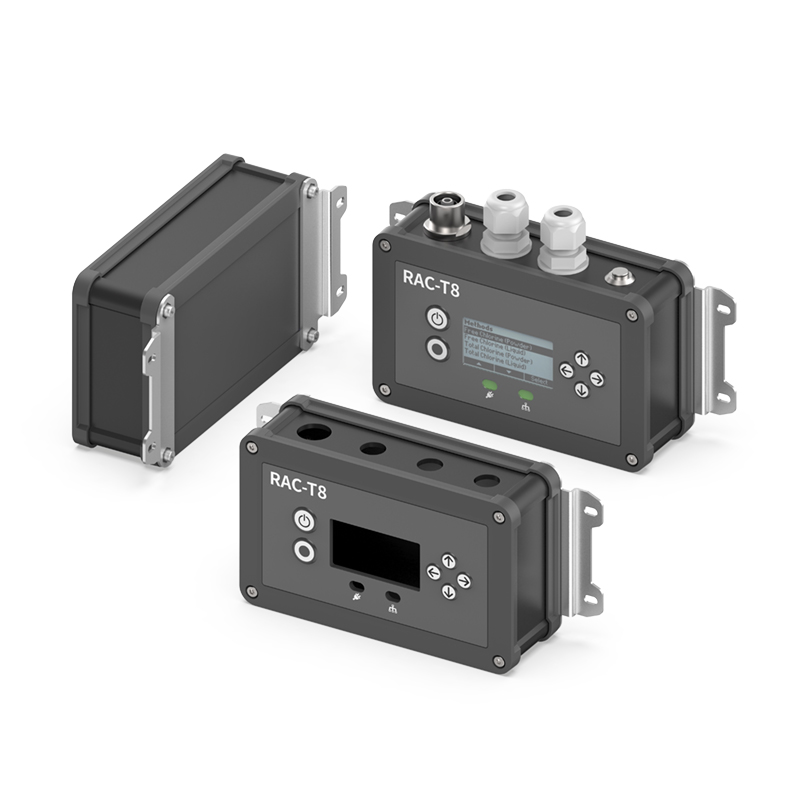
IP68 Waterproof Aluminum enclosure
Aluminum Enclosure Box: Strength and Durability
Aluminum electronics enclosure boxes are known for their excellent strength-to-weight ratio. The material offers superior protection against impact and corrosion, making it an ideal choice for applications requiring high durability. Key benefits of aluminum enclosures include:
- Durability: enhanced resistance to physical damage and wear, suitable for demanding environments.
- Heat dissipation: aluminum is an excellent conductor of heat, which helps dissipate heat generated by internal electronics, reducing the risk of overheating and prolonging component lifespan.
- Electromagnetic shielding: aluminum provides effective EMI shielding, essential for electronics exposed to electromagnetic interference.
- Corrosion resistance: aluminum is naturally resistant to corrosion, especially when treated with protective coatings, making it ideal for outdoor and marine applications.
- Precision and finish: with CNC machining, aluminum enclosures hold tolerances of ±0.05 mm and accept anodizing in up to 9 colors, plus brushing, sandblasting and powder coating.
On the engineering side, YONGU uses AL6063 aluminum for extruded enclosure profiles (H, J, K and L series) and AL6061 for CNC-machined and die-cast parts. Anodizing can be specified as a non-conductive finish for safety, while an Alodine (chromate) treatment keeps the surface conductive where grounding or EMI continuity is required.
The main drawbacks of aluminum are its higher cost than plastic and the additional manufacturing processes involved, such as cutting, CNC milling and welding for complex shapes.
Plastic Enclosure Box: Cost-Effectiveness and Versatility
Plastic electronics enclosure boxes are popular for their versatility and cost-effectiveness. They are lightweight, easy to manufacture and offer a wide range of design possibilities. Key benefits of plastic enclosures include:
- Lightweight: significantly lighter than aluminum, beneficial in portable applications or where weight is critical.
- Cost-effective: generally cheaper to produce, especially in large quantities, making it attractive for cost-sensitive projects.
- Design flexibility: plastic can be molded into a variety of shapes, offering more design freedom than metal.
- Electrical insulation: plastic is non-conductive, providing inherent electrical insulation.
On the engineering side, the two common plastics are ABS (tough, low cost, easy to finish) and polycarbonate (PC) (stronger, more heat- and UV-resistant). For safety-critical applications, flame-retardant grades rated UL94 V-0 or V-2 should be specified. Plastic enclosures can also be made UV-stabilized for outdoor use, although they still degrade faster than anodized aluminum under prolonged sunlight.
The downsides: plastic is not as durable as aluminum. It can crack under impact, does not offer the same heat dissipation or EMI shielding, and may degrade under UV radiation over time unless specially treated. For shielding, plastic enclosures typically need conductive coatings, liners or embedded metal.
Aluminum vs. Plastic: Side-by-Side Comparison
Here is a summary comparison table covering the factors buyers ask about most:
| Factor | Aluminum | Plastic |
|---|---|---|
| Strength & impact resistance | High | Low to medium (can crack) |
| Weight | Heavier | Lightweight |
| Heat dissipation | Excellent (conductive) | Poor (insulator) |
| EMI shielding | Natural shield | None (needs coating/liner) |
| Electrical insulation | Conductive (can be anodized non-conductive) | Inherently insulating |
| UV / outdoor durability | Excellent with anodizing | Degrades unless UV-stabilized |
| Flame rating | Non-combustible | UL94 V-0 / V-2 available |
| Machining precision | ±0.05 mm CNC | Mold-limited |
| Cost | Higher (mid volumes cost-effective) | Lower, especially in large runs |
| Recyclability | Fully recyclable | Limited |
Your Application Matters More Than the Material Label
There is no universal enclosure material for every electronic product. The better approach is to start with the actual requirements of your device.
For example:
Outdoor + waterproof requirements
Consider an IP-rated aluminum enclosure designed for outdoor applications.
High heat generation
Consider an aluminum enclosure where heat dissipation is an important part of the housing design.
EMI-sensitive electronics
Consider a metal enclosure when electromagnetic shielding is required.
Lightweight or insulation-focused applications
A plastic enclosure or a mixed-material design may be more appropriate.
Complex geometry or highly customized cutouts
A custom CNC-machined enclosure can provide greater design flexibility.
Want a More Specific Recommendation?
Tell us your application, dimensions, operating environment, quantity, and key technical requirements. We can help you compare standard enclosure options with custom solutions before you commit to a design.
Get a Custom Enclosure Recommendation →
For more information on choosing an enclosure for indoor or outdoor environments, see our indoor vs. outdoor enclosure guide.
Factors to Consider When Choosing Between Metal and Plastic Enclosures
1. Application Environment
If your electronics will be exposed to harsh conditions — extreme temperatures, high humidity, strong impacts or coastal salt air — an aluminum enclosure is the better choice for its durability and corrosion resistance. If the application is in a controlled indoor environment without extreme conditions, a plastic enclosure may suffice.
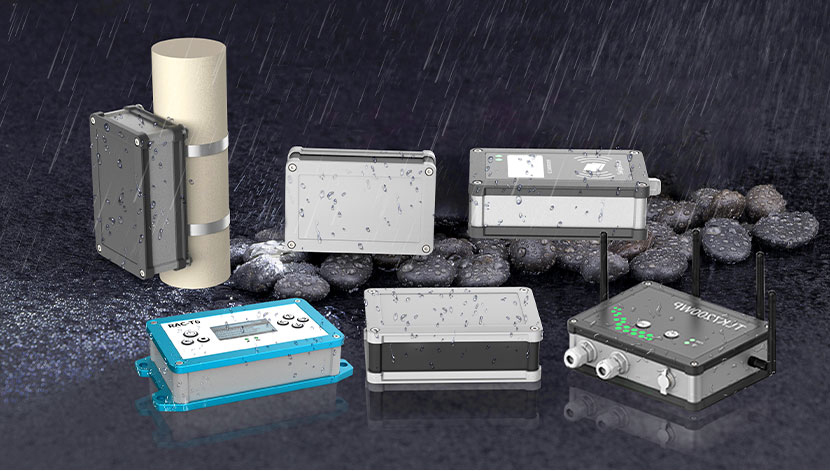
waterproof electronics enclosure box
2. Thermal Management
For applications that generate significant heat, aluminum is the better option because it dissipates heat efficiently through the housing. Plastic enclosures, while effective in many cases, may require additional cooling mechanisms such as vents, fans or heat sinks to prevent overheating. For sealed outdoor designs, aluminum can even act as a natural heat sink.
3. Electromagnetic Interference (EMI) Protection
If your electronics need protection from electromagnetic interference, an aluminum enclosure is essential. Aluminum acts as a natural shield against EMI, which is particularly important for communication devices, industrial control systems and other sensitive electronics. Plastic enclosures do not shield EMI unless a conductive coating or liner is added.
4. Cost and Production Volume
For projects with tight budgets or large production runs, plastic enclosures are typically more cost-effective due to lower manufacturing costs and flexibility in mass production. However, if your project demands higher performance and long-term reliability, the extra investment in aluminum enclosures is usually worth it — and for mid-volume runs, extruded aluminum is surprisingly competitive.
Which One Fits Your Application?
To make the decision concrete, here is how we usually map applications to materials:
- Choose aluminum if your device is: outdoor, industrial, high-power (needs heat dissipation), EMI-sensitive, marine/coastal, or requires precise cutouts and premium finishes. Matching series: H, J, K extruded enclosures, IP68 waterproof series, or custom CNC-machined enclosures.
- Choose plastic if your device is: indoor, consumer-grade, lightweight/portable, cost-sensitive at high volume, or needs inherent electrical insulation and a flame-retardant body.
- Hybrid approach: many products combine an aluminum body with plastic end panels or accessories to balance cost, insulation and durability — YONGU supports mixed-material designs as standard.
Find the YONGU Enclosure Solution for Your Application
Once you know which performance requirements matter most, choosing the enclosure type becomes much easier.
Standard Electronics Enclosure
For PCB-based electronics, control boards, instrumentation, and general electronic devices, YONGU H Series offers customizable aluminum enclosure options.
Outdoor & Waterproof Enclosure
For outdoor monitoring, IoT gateways, communication equipment, tracking systems, and other applications requiring strong environmental protection, explore YONGU IP-rated waterproof enclosure solutions.
Explore IP68 Waterproof Enclosures →
Fully Custom CNC Enclosure
For complex geometries, precision cutouts, premium finishes, or projects where a standard enclosure cannot meet the design requirements, YONGU provides custom CNC-machined aluminum enclosures.
Explore Custom CNC Enclosures →
Not Sure Which Route to Take?
Send us your drawing, 3D model, enclosure dimensions, or even a simple sketch.
Our engineering team can review the requirements and recommend a suitable enclosure structure, manufacturing process, and finish.
Conclusion
The choice between an aluminum electronics enclosure box and a plastic one ultimately depends on your specific needs. If you require durability, heat dissipation and EMI shielding, aluminum enclosures are the best option. If cost, lightweight design and electrical insulation are your primary concerns, plastic enclosures may be the better choice.
At YONGU, we specialize in custom aluminum electronics enclosure solutions with a complete in-house chain — design, molds, extrusion and die-casting, CNC machining (±0.05 mm), anodizing (up to 9 colors, non-conductive option) and printing. MOQ is 1 pc, samples ship in 5–7 days, and batch production takes 15–20 days.
Have a New Enclosure Project?
Whether you are evaluating aluminum vs. plastic, developing a new PCB housing, or looking for a custom enclosure manufacturer, YONGU can help you move from concept to production.
Send us your drawing or project requirements.
We can discuss:
- Material selection
- Enclosure structure
- Dimensions and cutouts
- Thermal management
- Surface finishing
- Production method
- Prototype and production requirements
Tell us your application, power budget and EMI requirements — our engineers will recommend the right material, finish and thermal design, and send you a quotation with a 3D model (STP) and 2D drawing (CAD). Download our product catalog and compliance reports, or contact +86 13326782625 / Contact YONGU.
Frequently Asked Questions
Is aluminum or plastic better for electronics enclosures?
For durability, heat dissipation and EMI shielding, aluminum is better. For cost, weight and inherent insulation at high volume, plastic is better. The right choice depends on your environment, power and budget.
Do plastic enclosures block EMI?
No. Plastic is transparent to electromagnetic interference unless a conductive coating, foil liner or embedded metal is added. Aluminum provides natural shielding without extra treatment.
Are aluminum enclosures worth the extra cost?
For outdoor, industrial or high-heat applications, yes — the added durability, thermal performance and shielding usually pay for themselves over the product lifecycle. For indoor consumer devices, plastic is often sufficient.
Which material is best for outdoor use?
Anodized aluminum is the most reliable for outdoor use: it resists corrosion, UV and impact, and can be sealed to IP68. Plastic needs UV stabilization and sealing, and degrades faster under direct sunlight.
Can plastic enclosures be flame-retardant?
Yes. Flame-retardant plastic grades rated UL94 V-0 or V-2 are available. Aluminum is naturally non-combustible. See our article on flame ratings for plastic electronic enclosures.
How does anodizing help aluminum enclosures?
Anodizing creates a hard, corrosion- and wear-resistant oxide layer on the surface. It can be applied in up to 9 colors, and can be specified as non-conductive for safety or masked to keep conductivity for grounding.
For more detail on brushed anodized finishes, read Why Brushed Anodizing for Your Aluminum Finish.